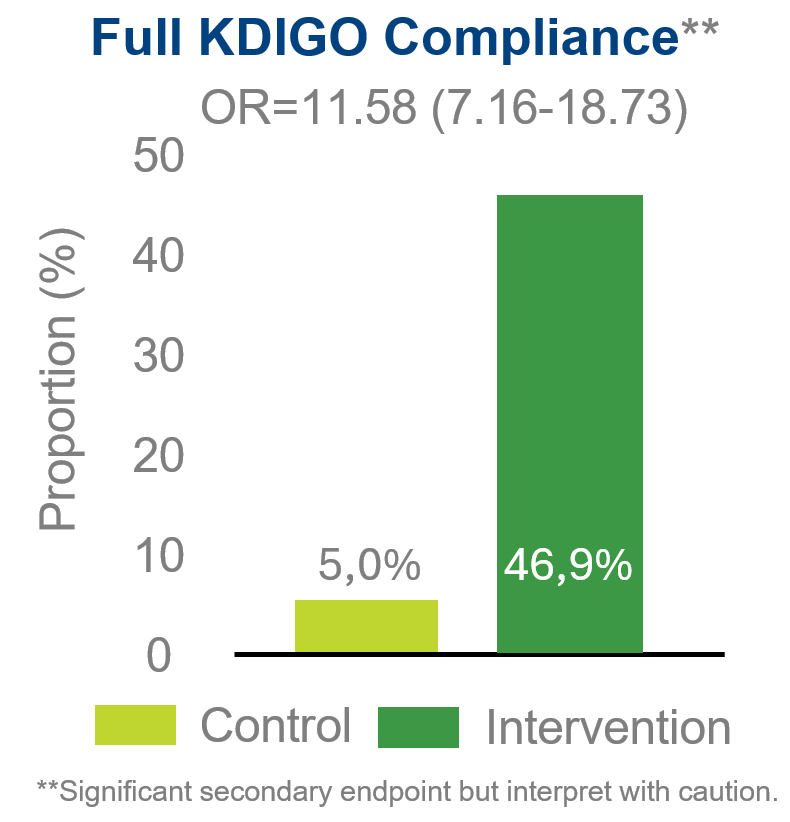
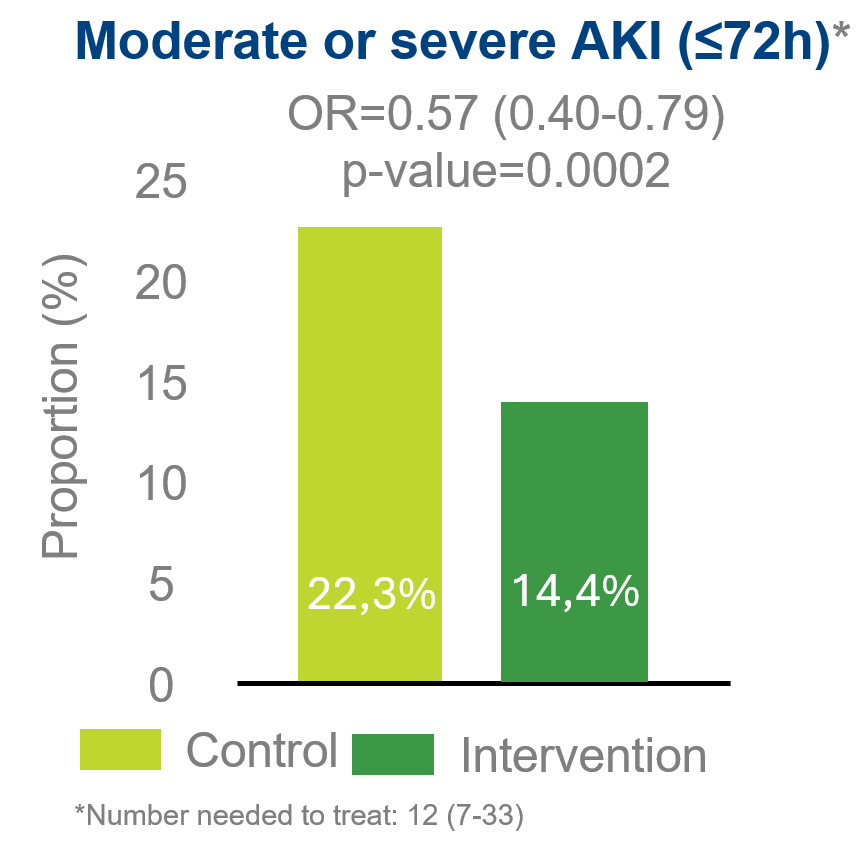
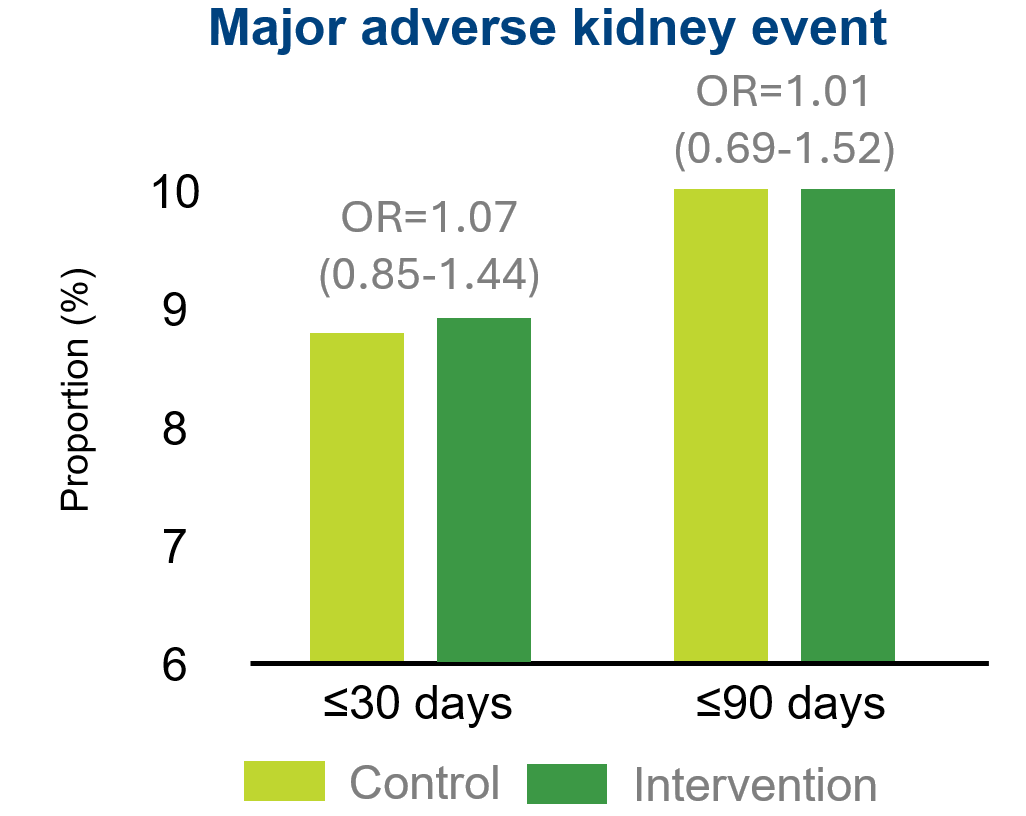
Implementation of KDIGO-recommended preventive measures can help reduce the occurrence of moderate to severe AKI within 72 hours after surgery1.
VIDAS® Nephrocheck®: Time to rethink AKI prevention
43% reduction in stage
2-3 AKI after major surgery
Early detection of kidney stress can help prevent acute kidney injury (AKI) after major surgery. Evidence from the BigpAK-2 randomized clinical trial, published in The Lancet, shows that biomarker-guided preventive care can significantly reduce the occurrence of moderate and severe AKI in high-risk patients.
IDENTIFY KIDNEY STRESS BEFORE DAMAGE OCCURS
Early Detection of Patients at Risk of AKI.
Acute Kidney Injury (AKI) is a common complication following major surgery and is associated with increased morbidity and longer ICU stays. Early identification of kidney stress allows clinicians to initiate preventive measures before significant kidney damage occurs.
The VIDAS® NEPHROCHECK® test measures the urinary biomarkers TIMP-2 × IGFBP7, indicators of kidney tubular stress. When performed 4–18 hours after surgery,this test helps identify patients at high risk of developing moderate or severe AKI and enables early intervention strategies.
Key indicators
- 96.3% negative predictive value for moderate and severe AKI when biomarker level ≤0.3
- Early risk identification within 4–18 hours after surgery
- Biomarker-guided identification of patients requiring preventive care
Explore the VIDAS® NEPHROCHECK® solution to identify kidney stress before damage occurs.
RISK OF AKI
RISK OF AKI
RISK OF AKI
RISK OF AKI
RISK OF AKI
RISK OF AKI
RISK OF AKI
RISK OF AKI
RISK OF AKI
RISK OF AKI
RISK OF AKI
RISK OF AKI
RISK OF AKI
RIGHT TIME
Acute kidney injury (AKI) is a frequent complication after major surgery and is associated with increased morbidity, mortality, and healthcare burden. Early identification of at-risk patients is critical to improve outcomes.
RIGHT PATIENT
Combining clinical risk factors with biomarkers such as TIMP-2 × IGFBP7 enables early identification of patients at risk of developing moderate to severe AKI following major surgery.
RIGHT PREVENTION
1BigpAK-2, Zarbock at all. doi: 10.1016/S0140-6736(25)01717-9
Evidence from the BigpAK-2 Multinational Clinical Trial
Biomarker-guided preventive care evaluated in high-risk surgical patients
The BigpAK-2 study, published in The Lancet, evaluated a preventive care strategy based on KDIGO nephroprotective recommendations in patients identified at high risk for AKI. The randomized clinical trial compared usual care with a structured preventive care bundle guided by biomarker testing.
The study involved 34 hospitals across Europe and included 1,176 patients at risk of moderate or severe AKI following major surgery. The intervention group received KDIGO-based preventive care including optimization of fluid status and perfusion pressure, hemodynamic monitoring, avoidance of nephrotoxic agents, and prevention of hyperglycemia.
Study Highlights
- Randomized clinical trial
- 34 European hospitals participating
- 1,176 high-risk patients: KDIGO strategy vs usual care